Players
Two partnerships, with partners seated opposite one another.
 Book Now
The story in the name
The farm takes its name from Klawerjas: four players, two partnerships and a small deck capable of filling a long evening.
Learn the first handFrom the Netherlands to the Cape
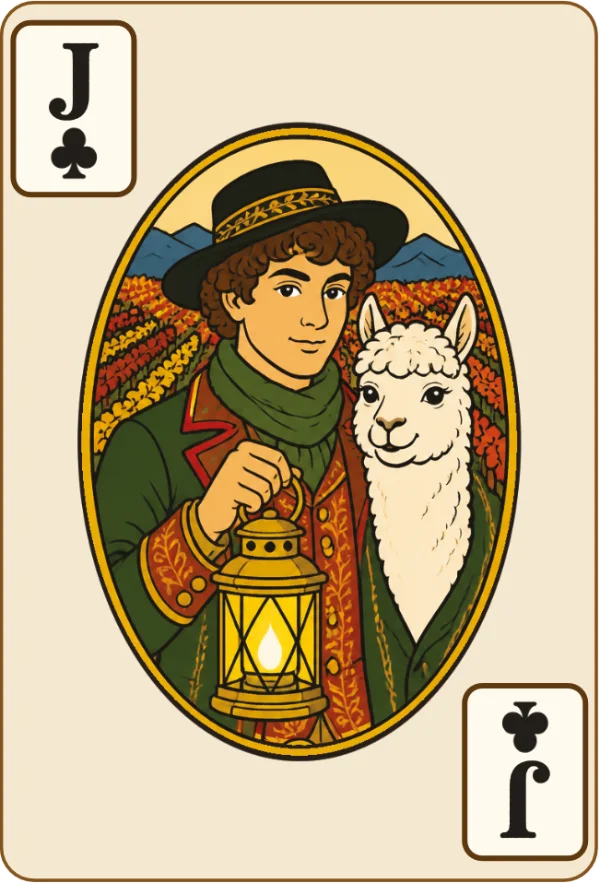
Klawerjas is the South African spelling of the Dutch partnership game klaverjas. The name joins klaver—clubs or clover—with jas, an old name for the Jack that becomes the most powerful card when its suit is trump.
The game travelled far beyond Dutch tables. In the Western and Eastern Cape it became a living social tradition, passed between generations and organised into clubs, unions and competitions. Around South African tables it also developed its own vocabulary: Boer, Manel, Roemte, Sturk, Twintig and Boom.
That mixture of heritage, partnership and good argument around a table is where the Klawerjas name begins.
The deal in four numbers
Two partnerships, with partners seated opposite one another.
Seven through Ace in clubs, diamonds, hearts and spades.
The whole pack is dealt, leaving no draw pile and no hidden reserve.
Each hand ends after every player has contributed one card to every trick.
The first surprise
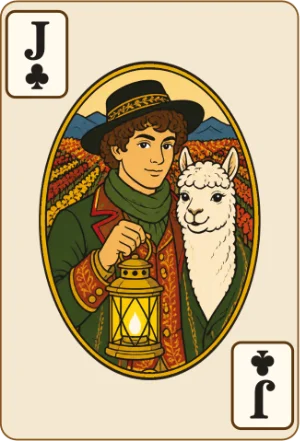
Ordinary suits favour the Ace and Ten. In trump, the Jack—known locally as the Boer—leaps to the top, followed by the Nine or Manel.
 J20
J20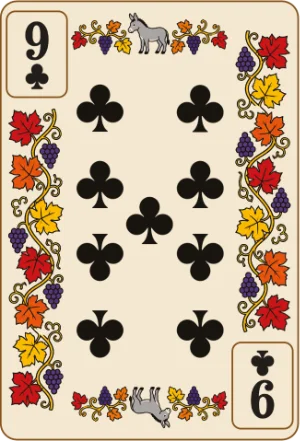 914
914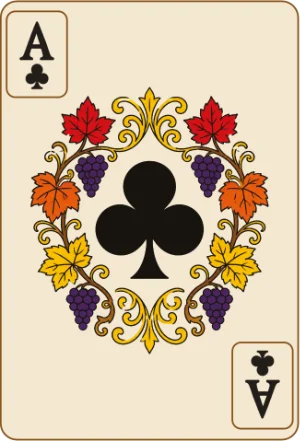 A11
A11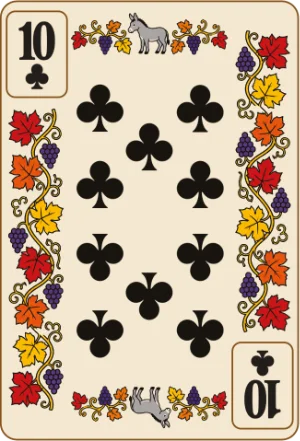 1010
1010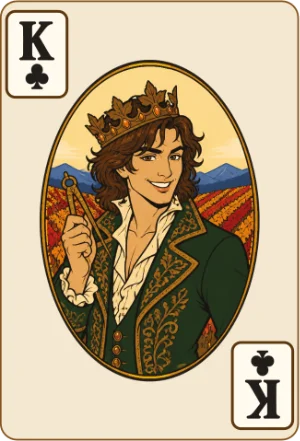 K3
K3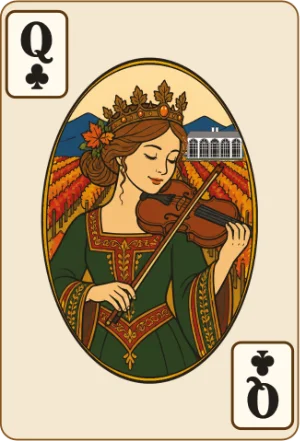 Q2
Q2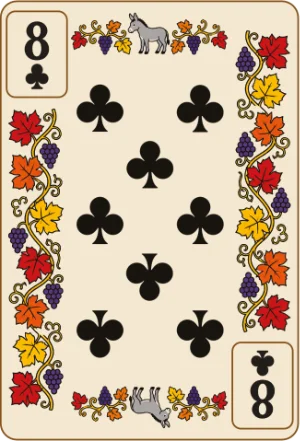 80
80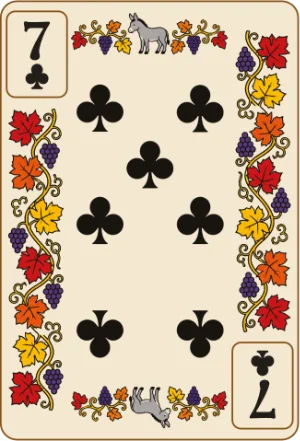 70
70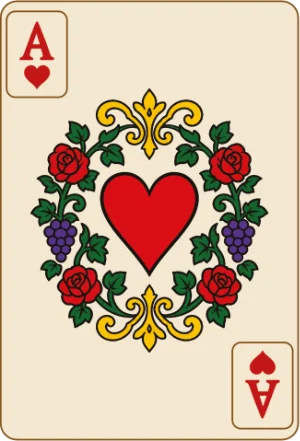 A11
A11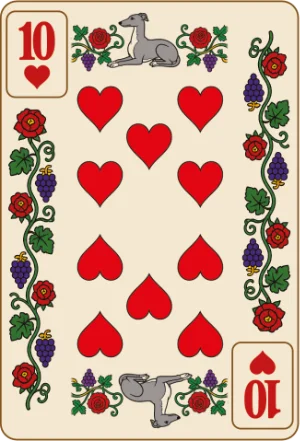 1010
1010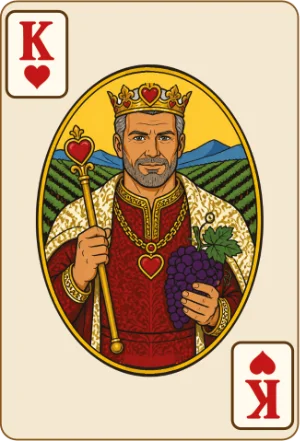 K3
K3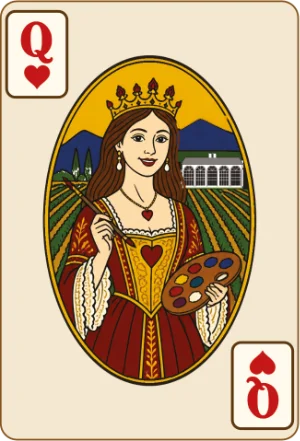 Q2
Q2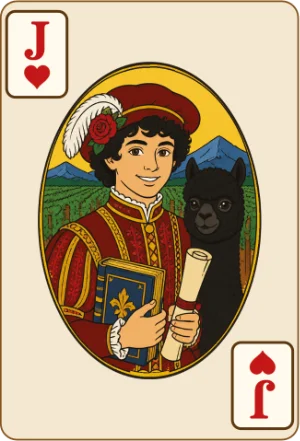 J1
J1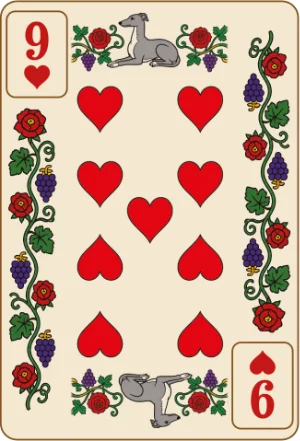 90
90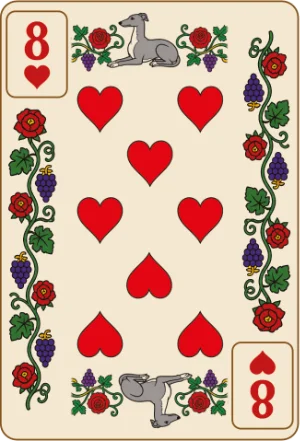 80
80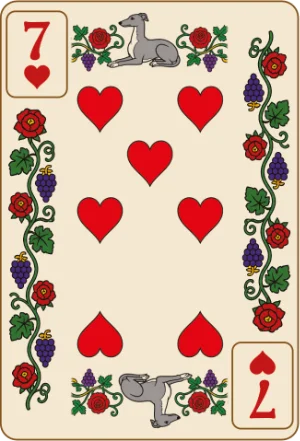 70
70The small number is the card's point value, not its position in a normal deck.
Your first hand
Four players sit around the table. Partners face one another, so every trick is played with—and against—someone you can see.
Use only the 7 to the Ace of each suit. The dealer works anticlockwise in packets of three, two and three—or two-three-three, or three-three-two—until everyone holds eight.
The last card dealt is turned face up, and its suit is trump for the hand. Nobody chooses it: the deal decides.
Holding a run or the King and Queen of trumps? Call it from your hand during the first round of play, so look closely before the first card goes down.
The player on the dealer's right leads. Follow the suit led if you can. A trump beats any other card, and only a higher trump beats it. Never play a lower trump than one already on the trick, unless trumps are all you hold.
The highest trump wins; with no trump, the highest card in the suit led. The winner leads the next trick, and the last trick of the hand is worth 5.
Strokes and the Boom
Every hand is worth 146 points: 141 in the cards and 5 for the last trick, with Roemte on top. The first side to reach 100 goes on one stroke, or two if the other side is still under 50. If nobody gets there, play an ou jol: a second hand, dealt by the side that took the last trick. First to five strokes wins the Boom.
Roemte · called from the hand
A 100 also earns two strokes.
Heard around a Cape table
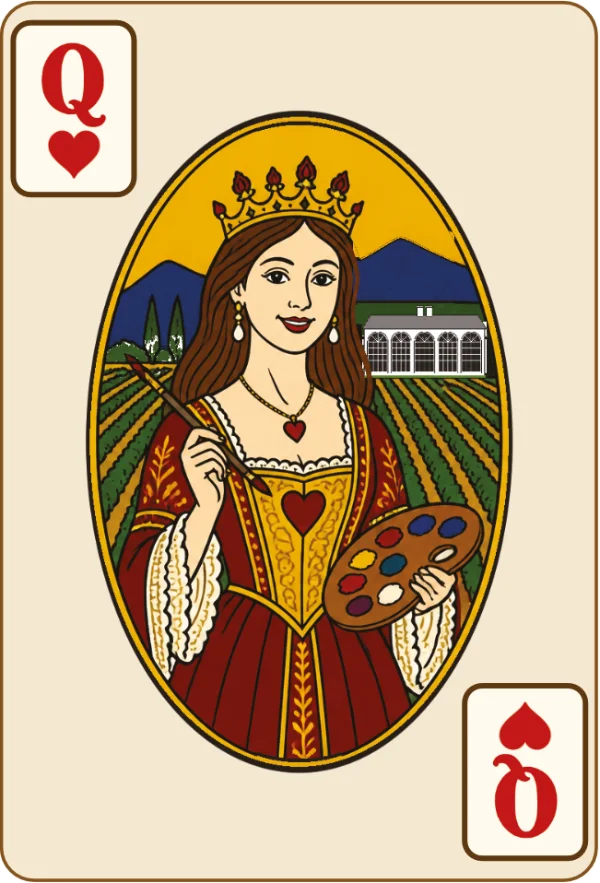
Now you know the name
Klawerjas rewards memory, partnership and the ability to read a table. The rules become clearer after one hand; the arguments about the right card may take rather longer.
This is a welcoming first-hand guide, not a competition rulebook. Regional and house rules differ.